Muslim Entrepreneur: Building a Halal Online Business in 2026


Ask ten people online how to start a business and you will get ten templates, most of them priced. Ask a Muslim entrepreneur a harder question and the answers get more interesting: does this business still look good once you have traced how the money actually arrives?

That question sits at the centre of everything below. Not motivation, not hustle, not another productivity system. Just the practical work of building something online that you can defend on the Day of Judgement as well as on a profit and loss sheet.

Why 2026 Rewards Careful Builders

Tools have become cheaper and faster. A single person with a laptop can now produce content, build a storefront, answer customer queries and run a small marketing operation without hiring anyone. That is genuinely useful for anyone starting with limited capital, which describes most people reading this.

The same tools have also made it easier than ever to launch something half-formed and loud. The barrier to entry has fallen for honest traders and for chancers alike. So the advantage in 2026 does not go to whoever launches fastest. It goes to whoever can explain their offer clearly, keep their promises small and deliver them fully.

For Muslim founders, that is a comfortable position to occupy. The values most people treat as a nice extra, honesty, fair dealing, no interest, are the operating rules you were always going to apply anyway. The trick is making sure your business model does not quietly pull against them.

Start With the Offer, Not the Platform

Beginners tend to pick a platform first, then hunt for something to sell on it. That order is backwards. Decide what problem you solve for whom, then choose the simplest tool that lets you do it.

Screening the product

Ask what the customer is actually paying for. A service, a physical good, a piece of teaching or a piece of software all have to pass the same basic test: it must be useful, it must be described accurately, and it must not depend on someone else’s loss. Anything sold on exaggeration of results is a problem even before you get to the question of what is being sold.

Screening the income model

This is where more online businesses fall down than anywhere else. Recurring payments for nothing delivered, recruitment where the real money sits in signing up other people, ad revenue from content that would embarrass you if your family read it. Each of those needs a proper look, ideally with someone who knows the fiqh as well as the business model.

If you cannot explain your revenue clearly in two sentences to your local imam, without flinching, you have not finished screening it.

small business owner
Photo by Vitaly Gariev on Pexels

Where to Find Other Muslim Entrepreneurs

You are not short of company. Several established networks exist specifically for Muslim founders, and most of them are free to look at before you commit to anything.

  • The Global Muslim Entrepreneurs Network connects founders, professionals, investors and ecosystem builders, describing its work as entrepreneurship in harmony with Islamic values and framing a good idea as more than trade.
  • Deenpreneurs positions itself as a hub for Muslim entrepreneurs and startups, focused on building, launching and scaling, with an emphasis on helping Muslims discover their purpose.
  • The SMBF Global Network brings together Muslim entrepreneurs, business owners and industry leaders to grow, trade and invest, and publishes material on starting an Islamic business and on career mentorship for Muslim women.
  • The Muslim Entrepreneur Network describes itself as a consulting agency that inspires, empowers and educates people on how to build successful businesses.
  • Ummahpreneur provides a support system for Muslim entrepreneurs, founders and innovators, and also runs social media services aimed at helping Muslim businesses raise their visibility.

Read that list again and notice what none of them promise. None guarantee income. They offer connection, education and a room full of people further along than you. That is what a network is for.

Mentoring Beats Another Course

Islamic Finance Guru made a point in a 2023 article on starting a business that is easy to skip past: a really important element is having people you can turn to for help, advice and mentoring. Not seventeen courses. People.

The difference matters because courses sell a version of a business that worked for the person teaching it, in their market, at their moment. A mentor looks at your situation and tells you which part of your plan is fantasy. That is far less comfortable and far more valuable.

Where do you find one? Start inside the networks above. Follow founders whose work you respect, and look at people who have actually traded, not only people who teach trading. Maruf Yusuf, chief executive of the Muslim marketing agency and Islamic advertising network Halal, is a useful example of someone whose credibility rests on running a business rather than talking about one, and he has appeared on the Ummahpreneur podcast discussing exactly that territory.

Reading helps too. Deenpreneurs offers free copies of two books on its site that speak to habit and to the tension between deen and dunya, and there is a well-known video discussion on the two books a Muslim entrepreneur should own. Take the recommendations as starting points, then test them against your own circumstances.

online business
Photo by Katerina Holmes on Pexels

Content, Consistency and Quiet Marketing

Ummahpreneur names the problem most small business owners will recognise instantly: you know you should be creating content, but between serving clients and running the operation, it never happens. Their diagnosis is not laziness. It is that hiring a freelancer who does not understand your voice or your values produces work you then have to redo yourself.

The practical answer for a one-person business is smaller than the advice usually offered. Choose one format you can sustain. Write or record it yourself at first, even badly, because your voice is the asset. Show the work: the orders packed, the problem solved, the thing you got wrong and fixed. Honest, unglamorous content builds trust faster than a polished feed that reveals nothing.

And keep the marketing clean. No manufactured scarcity, no fake countdown timers, no testimonials you have embellished. If the business only works when the customer is slightly misled, the business is not working.

Guarding Against Income Promises

You will be offered a great deal this year. Workshops promising a fixed monthly figure, systems that claim to remove the effort, courses that sell the lifestyle before they explain the mechanics. The pattern is consistent: bold numbers in the marketing, vagueness about how the money is generated.

A simple filter helps. Ask what specifically you would be doing on a Tuesday morning in month three. If the answer is unclear, or if the honest answer is recruiting others, walk away. The same applies to anything that asks for payment before it will explain what you are buying.

muslim business
Photo by MART PRODUCTION on Pexels

Build Slowly, Deliberately and in Public

An online business in 2026 does not need to be large to be worthwhile. A modest service with ten loyal clients, priced fairly and delivered well, can support a household and leave your conscience intact. Growth is optional. Integrity is not.

Start with the offer you can defend, screen the income before you scale it, find people who will tell you the truth, and keep your promises smaller than your capability. Do that consistently and the business will look after itself far better than any launch funnel ever managed.

Frequently Asked Questions

Is it permissible to earn money from an online business?

Earning online is not a separate category with its own ruling. What matters is what you sell, how you sell it and how the money changes hands. Sell something useful, describe it honestly, avoid interest and avoid income that depends on others losing. For a specific model, ask a qualified scholar who understands modern commerce.

How do I find a mentor as a Muslim entrepreneur?

Start with existing networks such as the Global Muslim Entrepreneurs Network, Deenpreneurs, the SMBF Global Network or Ummahpreneur. Follow founders whose businesses you respect, engage genuinely with their work, then ask a specific question rather than a vague request for help. Specific questions get answers, and answers become relationships over time.

Do I need a business course before I start?

No. A course can help if it teaches a skill you lack, but it is not a substitute for trade. Look instead for mentoring from people who actually run businesses, read widely, and check the claims in any paid programme against what you can verify. Be wary of anyone who leads with income figures rather than method.

Can I sell digital products in a halal business?

Digital products are fine in principle. The question is what the product contains and how it is sold. A guide, template or course that delivers real value and is described accurately is straightforward. Problems appear when the product promises guaranteed results, contains impermissible material, or exists mainly to recruit more buyers.

What should I avoid when choosing a business idea?

Avoid anything where the marketing is clearer than the method. Ask what you would genuinely be doing each day, who pays you, and why they would keep paying. If any of those three answers is fuzzy, or if the model only works while new people keep joining, choose something else before you spend money.


Business for Sale Work From Home: Halal Due Diligence Checklist

Buying a business for sale that lets you work from home sounds like the ideal arrangement. No commute, more time with the family, and an income stream that already exists rather than one you have to build from nothing. That last point matters. As one UK marketplace guide puts it plainly, buying a work from home business can provide you with extra financial security and an existing, proven customer base as opposed to launching a risky startup.

But here is the part the advert rarely mentions. A business listing is a sales document. It is written to make you say yes. For a Muslim buyer, the due diligence has to cover two things at once: whether the business is financially sound, and whether the way it earns money is halal. Skipping either one is a problem. A profitable business built on interest charges is not a clean purchase just because the numbers look good, and a scrupulously ethical business with no real customers is still a bad buy.

This guide walks through both sides of that checklist, in plain terms, with no pressure and no promise of easy money.

What “Work From Home Business For Sale” Actually Covers

The listings you will find on the big UK marketplaces are not one category. They are a bucket. Under a “home based” or “work from home” filter you will see online retailers, online service providers, management businesses run from a spare room, and franchise resales where the franchisee is moving on. One marketplace describes the sector as mostly online businesses, covering online retailers, online services and home based management businesses.

Because the label is so broad, the first due diligence task is simply understanding what you are being shown. A few questions worth asking before you go any further:

  • Is this an independent business, a franchise resale, or a distributorship?
  • Does the seller work from home by choice, or because the business has no premises and no assets beyond a laptop?
  • Is the income from selling goods, selling services, or recruiting other people?
  • How many hours a week does the seller actually put in?

That last question exposes a great deal. Plenty of adverts describe a flexible, family friendly arrangement. That does not automatically mean the workload is light. If the current owner works sixty hours a week to hit the figures in the advert, the business is not really a part-time income, whatever the listing suggests.

The Halal Screen: What to Check Before the Numbers

Most buyers start with the price. A Muslim buyer should start somewhere else, because the nature of the income determines whether the purchase is permissible at all. There is no point spending weeks on accounts for a business you cannot ethically own.

Where the revenue comes from

Ask for a breakdown of income by source, not a single turnover figure. A business might draw most of its revenue from clean product sales and a small slice from something less comfortable, like interest on customer credit, late payment penalties, or advertising for categories you would not want to promote. That mixed picture needs to be understood before you commit, and you should ask the seller directly to itemise it.

Riba in the payment terms

Home based businesses often involve customer finance, deposits, staged payments or credit accounts. Look at the standard terms of trade and see whether any of them charge interest or a fee that functions as interest for late payment. If the business model depends on that income, it is a serious issue. If it is one clause in a template contract, you may be able to change it after completion, but you should price that into your thinking rather than discover it later.

Gharar and misleading marketing

Excessive uncertainty in a contract is a problem in Islamic commercial ethics. Practically, this means looking at what the business actually promises customers. Does it deliver a clear product or service for a clear price? Or does it sell vague outcomes, “opportunities”, or income claims it cannot substantiate? This is where a lot of work from home listings become uncomfortable. If the revenue depends on recruiting people with optimistic promises, the ethical risk is not a technicality.

Insurance, finance and lending

Conventional business insurance and bank lending are common features of any purchase. Many Muslim buyers and scholars handle conventional insurance and interest bearing finance through specific, considered positions rather than blanket assumptions. This is a matter to raise with a scholar you trust and to handle before you sign a sale agreement or a commercial lease, not after. Where a halal alternative exists in your market, ask about it explicitly rather than assuming it is unavailable.

business documents
Photo by Vanessa Garcia on Pexels

Financial Due Diligence for a Home Based Business

Once the income is ethically acceptable, the numbers need the same scrutiny you would apply to a shop or a factory. The difference is that a home business has fewer physical assets to inspect, so the figures carry more of the weight.

What to request Why it matters
At least two to three years of accounts One strong year can be a fluke or a boost from a temporary contract
Business bank statements Statements show money actually arriving, unlike a prepared profit and loss sheet
Tax returns and filings Confirms the business reports what it claims to earn
Customer list and revenue concentration If one client is most of the income, you are effectively buying that client’s goodwill
Supplier and platform contracts Shows whether key terms transfer, or whether the business depends on accounts in the seller’s name
Outstanding debts and liabilities A cheap asking price can hide obligations that follow the business

Be careful with any listing that refuses to share basic figures before a non disclosure agreement. An NDA is normal and reasonable. Refusing to show accounts at all is not.

Separate the business from the person

Many home based businesses are really one person’s reputation, relationships and daily habits. That is not automatically a reason to walk away, but you need to know how much of the value walks out of the door with the seller. Ask how customers found the business, how much of the work depends on the owner’s personal name, and whether the seller is willing to stay on for a handover period. If the answer is that nobody knows the business exists apart from the owner’s own contacts, you are buying a job, not a business.

Check what actually transfers

Domain names, marketplace accounts, software subscriptions, franchise agreements, supplier terms and customer contracts may all be held personally rather than by the business. Some platforms do not permit account transfers at all. Verify each one with the platform or supplier directly, in writing, rather than accepting the seller’s assurance that it is “all straightforward”.

Red Flags in Work From Home Listings

Some patterns appear again and again, and they are worth naming so you can spot them quickly.

  • Income claims with no evidence behind them, especially screenshots rather than statements
  • Vague descriptions of what the business actually does
  • A price that sits oddly high or oddly low relative to any stated turnover
  • Pressure to move fast, or a claim that other buyers are circling
  • Revenue described as “passive” with no explanation of who does the work
  • Training offered as the main asset, rather than customers or contracts
  • Reluctance to let you speak to existing customers or the outgoing franchisee

That last one deserves its own paragraph. A “no experience needed, full training provided” pitch is a marketing line, not a due diligence finding. Training has value, but it is not a customer base and it is not revenue. If the core of the offer is the training rather than a trading history, treat the asking price as a course fee rather than a business valuation, and decide whether that is what you actually want to buy.

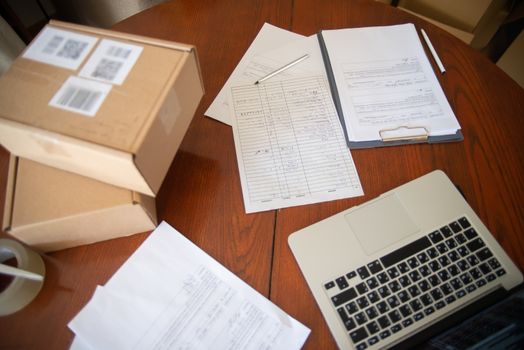
laptop paperwork
Photo by Kampus Production on Pexels

Franchises and Work From Home Arrangements

Franchising is a common route into home based self employment in the UK, and some franchises are explicitly aimed at parents who want to work around family life, with sectors including finance, consultancy, management and property management among the options. Franchising can reduce some risks because the model and branding are established. It introduces other risks of its own.

Read the franchise agreement properly

You need the franchise agreement itself, not a summary. Look at the term, renewal conditions, territory, restrictions on what else you can do, fees and exit arrangements. Also check what happens to the agreement on a resale, since transferring a franchise to a new owner usually requires the franchisor’s consent. Ask the franchisor directly what their approval process involves and how long it takes.

Speak to other franchisees

Current and former franchisees will tell you things the brochure will not: realistic earnings, how much support you actually receive, and what happens when things go wrong. Speak to more than one, and ask specifically about the gap between the marketed figures and what people actually take home.

Scam Awareness: The Overlap With Online Income Schemes

Some of what is advertised as a work from home business is not a business at all. Recruitment driven schemes, inflated income claims and paid “opportunities” that mostly sell the opportunity itself sit in the same search results as genuine listings. If a proposition depends on signing up other people, or if it cannot survive a straightforward question about where customer money comes from, walk away. Ask for the source of revenue in one sentence. A real business can answer that in a sentence.

Being sceptical is not negativity. It is the same protective instinct that should be applied to any online income claim, and it applies equally to a business advertised for sale.

small business owner
Photo by Vitaly Gariev on Pexels

Practical Steps and Cost Considerations

Confirm the process with the marketplace, broker or franchisor rather than relying on a blog post, including what fees apply, what deposit is expected, and what happens if the sale does not complete. Where a business is being sold as a going concern, take professional advice on the structure of the deal. An accountant and a solicitor with small business experience are not optional extras here, and using them is part of doing this properly.

Set a realistic total budget, not just a purchase price. Consider the professional fees, any franchise transfer fee, working capital for the first few months, and the possibility that income drops after the seller leaves. If the deal only works when everything goes perfectly, it does not work.

Finally, write down your own halal criteria before you start looking, and stick to them. It is much easier to reject a tempting listing when you have already decided in calm conditions what you will and will not accept. Buying a business that lets you earn from home, on your own terms, with clean income and honest numbers, is entirely possible. It just requires you to be the one asking the difficult questions, rather than the seller.

Frequently Asked Questions

Is buying a business for sale to work from home halal?

It can be, provided the income itself is permissible. The purchase structure is not the main issue. What matters is what the business sells, whether its contracts involve interest or excessive uncertainty, and whether its marketing is honest. Review the revenue sources and standard terms carefully, and consult a scholar you trust on any point you are unsure about before you sign.

What documents should I request first?

Start with two to three years of accounts, business bank statements, tax filings and a breakdown of income by source. Then ask for customer contracts, supplier and platform agreements, and a list of outstanding liabilities. Bank statements are particularly useful because they show money actually received rather than figures prepared for a listing.

How do I check if a home based business depends on the seller?

Ask how customers found the business and how much depends on the owner personally. Request the customer list and look at revenue concentration: if one client provides most of the income, you are buying that relationship rather than a business. A handover period with the seller is worth negotiating, and you should confirm it in the sale agreement.

Are work from home franchises safer than independent businesses?

They carry different risks rather than fewer. The model and branding are established, but you take on the franchise agreement, its fees, territory rules and renewal terms. Read the agreement in full, ask the franchisor about the consent process for a transfer, and speak to several current and former franchisees before committing to anything.

What should make me walk away immediately?

Refusal to provide any figures, income screenshots instead of statements, heavy pressure to move quickly, and revenue that depends on recruiting other people all justify ending the conversation. Training offered as the main asset rather than an existing customer base is another warning sign. A genuine business can explain clearly, in one sentence, where its money comes from.

What Is Wealthy Affiliate? A Plain Answer for Complete Beginners

Wealthy Affiliate is an online platform where people learn to build an online business around their own website and content, and where the tools for doing that sit in the same place as the lessons. You open a Hub for your project, follow a gameplan of Tasks, and use Learn, the Writer and the Artist to get the work done.

a muslim couple in business suits sitting at a computer desk looking thoughtful and questioning.

If you are new to online income, that description is probably still a little abstract. The rest of this article fills it in: what you get, what you do in the first week, what Wealthy Affiliate cannot promise, and who should look elsewhere Continue reading What Is Wealthy Affiliate? A Plain Answer for Complete Beginners →

Business Ideas Work From Home: Halal Options for 2027

home office desk
Photo by Letícia Alvares on Pexels

Searching for business ideas work from home can feel like walking through a market full of people shouting offers at you. Some of those offers are genuine. Plenty are not. If you want to earn from home without compromising your deen, the first filter is not profit potential, it is how the money is actually made. Continue reading Business Ideas Work From Home: Halal Options for 2027 →

Selling Digital Products Online: Are the claims true?

SELLING DIGITAL PRODUCTS ONLINE: Are the claims true?

The $27 Canva Product Myth: Can You Really Make $27,000/Month Selling Digital Products Online?

If you’ve spent more than five minutes on social media lately, you’ve probably seen this viral advice:

“Instead of watching Netflix tonight, open Canva, take 30 minutes, create a digital product you can sell 1,000 times for £27, and boom — £27,000/month.”

It sounds tempting Continue reading Selling Digital Products Online: Are the claims true? →